A RAG system that answers correctly 90% of the time on curated test questions answers correctly 60% of the time on real user queries. This happens because real queries are ambiguous and often outside the training distribution.
A feature that takes 8 seconds to respond is actually an obstacle. Most GenAI implementations don't model latency requirements until they're in staging. By then, architecture changes are expensive.
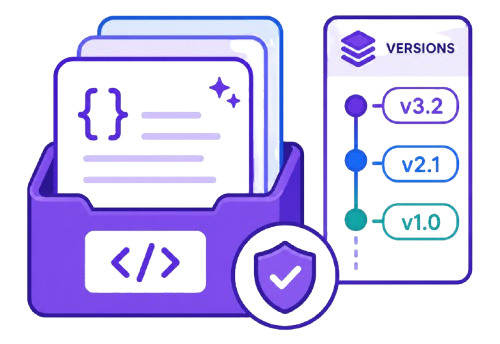
Prompts that are edited in a UI, stored in a spreadsheet, or living in one engineer's head will break unpredictably as models update. Prompt management needs the same discipline as code.
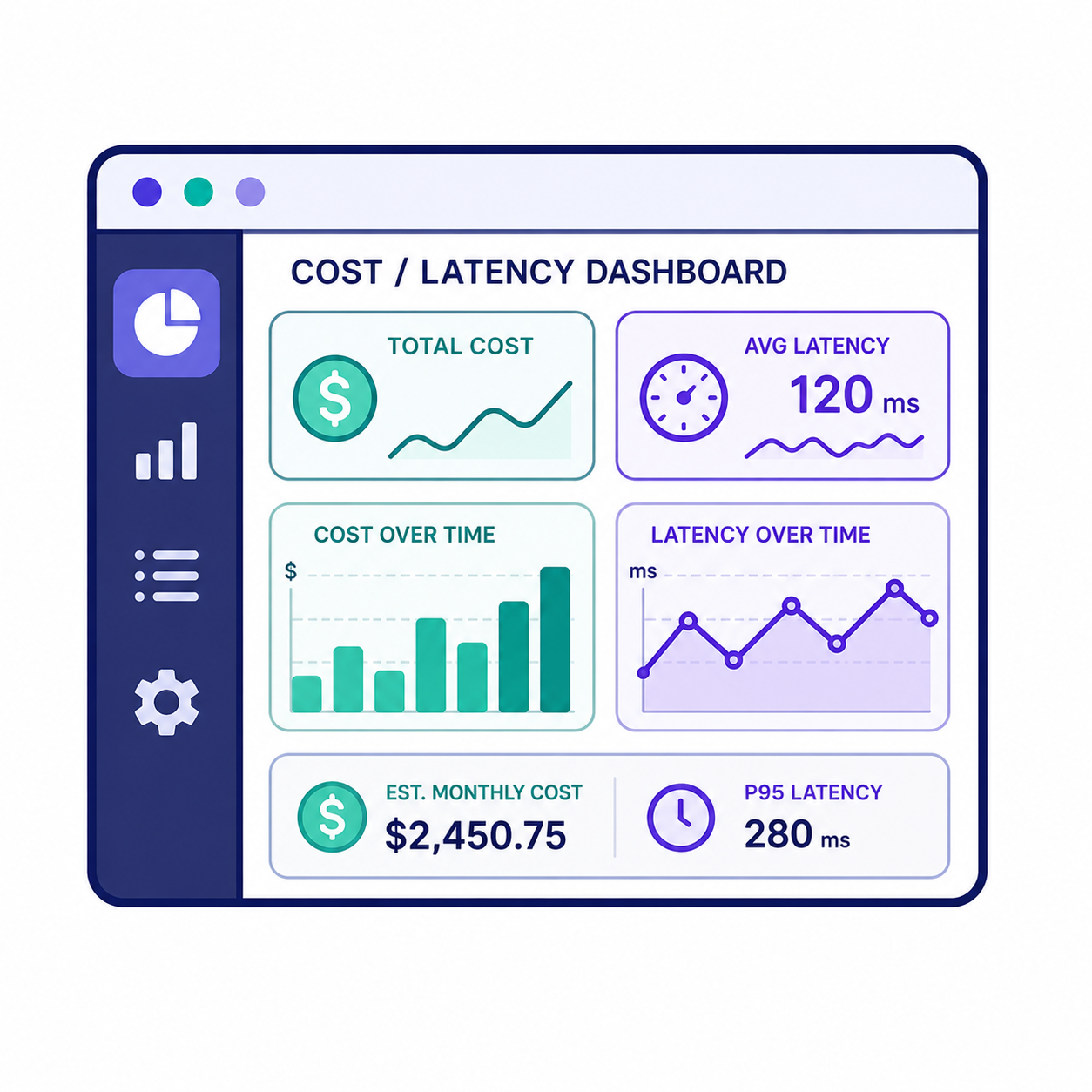
A feature that costs $0.002 per request at 1,000 daily users costs $730 a year. At 100,000 daily users it costs $73,000. Most teams don't model token economics until they receive their first cloud bill.
We don't recommend fine-tuning when RAG solves it. We don't recommend GPT-4 when a smaller model is sufficient. Our recommendations are driven by your cost, latency, and accuracy requirements — not by vendor relationships.
Data audit, accuracy requirement definition, latency budget, cost modeling, and evaluation criteria established. Output: a GenAI architecture recommendation with realistic accuracy and cost projections — before any build begins.
Document ingestion, chunking, embedding, and vector store setup. Baseline model evaluated against your defined test set. Retrieval quality is benchmarked before any application layer is built.
Application layer built with versioned prompts, structured output handling, error management, and fallback logic. Latency and cost are profiled at every stage.
Evaluation suite run against production-representative data. Cost and latency optimizations applied. Monitoring dashboards configured. Production deployment and team enablement.
Start with a GenAI Feasibility Assessment — a two-week scoping engagement that defines your evaluation criteria, data requirements, and realistic accuracy projections. No model trained. No commitment to build.

RAG system over 50,000+ internal documents — policy, process, and product documentation — deployed for a 3,000-person enterprise with SSO, source citation, and confidence scoring.
Outcome:
Answer accuracy of 87% on internal benchmarks; 65% reduction in time-to-answer for recurring internal queries

LLM-powered contract review system extracting key clauses, dates, obligations, and risk flags from unstructured legal documents — integrated with document management system.
Outcome:
Document review time reduced from 4 hours to 18 minutes per contract; lawyer review focused only on flagged items.

GenAI classification and response drafting system integrated with Zendesk — classifying intent, drafting responses for agent review, and auto-resolving routine queries.
Outcome:
reduction in average handle time; 31% increase in first-contact resolution rate.

Fine-tuned content generation system producing on-brand product descriptions from structured data for a retailer with 200,000+ SKUs.
Outcome:
Content production time reduced by 94%; SEO performance of AI-generated descriptions matched human-written baseline within 60 days.
























Book a GenAI Technical Assessment — two weeks, evaluation framework defined, architecture recommended. No model trained, no obligation to continue.
We reduce hallucinations through better retrieval, source grounding, structured prompts, confidence rules, and evaluation testing. For RAG systems, we improve chunking, metadata, hybrid search, re-ranking, and citation logic. We also define fallback behavior so the application can avoid unsupported answers when the right source context is missing or unclear.
We model usage, token volume, model pricing, traffic estimates, prompt length, response size, and retry behavior before launch. Cost control may include caching, model routing, context compression, smaller models for simpler tasks, rate limits, and live monitoring. This keeps the generative AI development service aligned with business unit economics.
Yes. We audit existing GenAI prototypes to identify issues in model choice, prompts, retrieval quality, latency, cost, evaluation, and integration. Depending on the findings, we may redesign the RAG pipeline, add prompt versioning, improve structured outputs, introduce regression testing, optimize context, or replace the model with a better fit.
We treat prompts as production assets, not one-time instructions. Our custom LLM development services include prompt design, version control, regression testing, structured output handling, rollback support, and performance tracking. This helps prevent unexpected failures when user inputs change, business rules evolve, or model providers release updates.
A focused GenAI feature or RAG-based application can often move from scoping to deployment in six to ten weeks, depending on data readiness and integration complexity. Larger projects involving multiple systems, sensitive data, custom workflows, or advanced evaluation may take longer. We start with feasibility to define realistic timelines.
We build GenAI applications for enterprise knowledge Q&A, document analysis, product content generation, customer support triage, semantic search, data extraction, summarization, classification, and quality review. Each generative AI development service is scoped around a measurable workflow, clear accuracy requirements, latency needs, security expectations, and long-term maintainability.


Since 1999, SunTec has been a trusted business process and software engineering partner for technology companies worldwide. Our team of over 1,500 full-time employees delivers innovative services every day to help our clients save time and money.


