A query like "red running shoes for wide feet" returns zero results from a keyword engine that cannot find "wide" in the product data, even when matching products exist. Intent understanding is the minimum standard for modern search.
Every zero-result page is a customer who arrived with intent and left with nothing. Spell correction, query rewriting, and synonym expansion must be built into the ranking layer, not added as afterthoughts.
Showing the same results to a first-time visitor and a loyal premium-brand customer ignores signals that should drive relevance. Personalized ranking is the difference between search that sells and search that just lists.
What customers search for, and do not find, is the richest signal in your platform. Teams that cannot act on search analytics in real time are operating without their most important data.
Every query is understood, ranked, and served with low-latency response times. The pipeline runs five stages, each tuned for relevance and speed in production traffic.
| Stage | What Happens | Output |
|---|---|---|
| Query Input | User types or speaks a search query. | Raw query string captured. |
| NLU Layer | Intent and entity extraction in natural language understanding. | Structured query with detected entities. |
| Semantic Index | Vector and keyword hybrid lookup across the index. | Candidate result set. |
| Ranking Engine | Personalized re-ranking against shopper profile and session signals. | Ordered, relevance-scored result list. |
| Results Served | Low-latency response delivered to the frontend. | Ranked results rendered to the user. |
The platform is fully managed on your infrastructure. Each layer is independently scalable, so you can tune performance and cost without rebuilding the stack.
The platform connects to your existing commerce, frontend, and data systems via API. There is no forced migration, and you keep ownership of the data and models.
Current search performance is benchmarked. Zero-result queries, click-through rates, and conversion gaps are identified. Integration points are mapped, and success KPIs are agreed upon.
Product catalog is indexed. Embedding models are fine-tuned on your domain vocabulary. Synonym graph and query expansion rules are configured against representative queries.
API integration with your frontend is completed. The personalization layer is connected to behavioral data. The A/B framework is configured, and shadow-mode validation runs before live traffic.
Phased traffic rollout begins, with ranking performance monitored against baseline. Weekly optimization cycles run, and the full analytics dashboard goes live for your team.
The patterns below reflect the kinds of engagements we run across DTC, B2B, and content-heavy platforms. Outcomes are illustrative and depend on the starting baseline and data quality.

Deployed semantic search and personalized ranking across a large SKU catalog on Shopify Plus, replacing native search and integrating with Segment for behavioral signals.
Outcome:
Meaningful uplift in search conversion and revenue per session, with a reduction in zero-result rate.
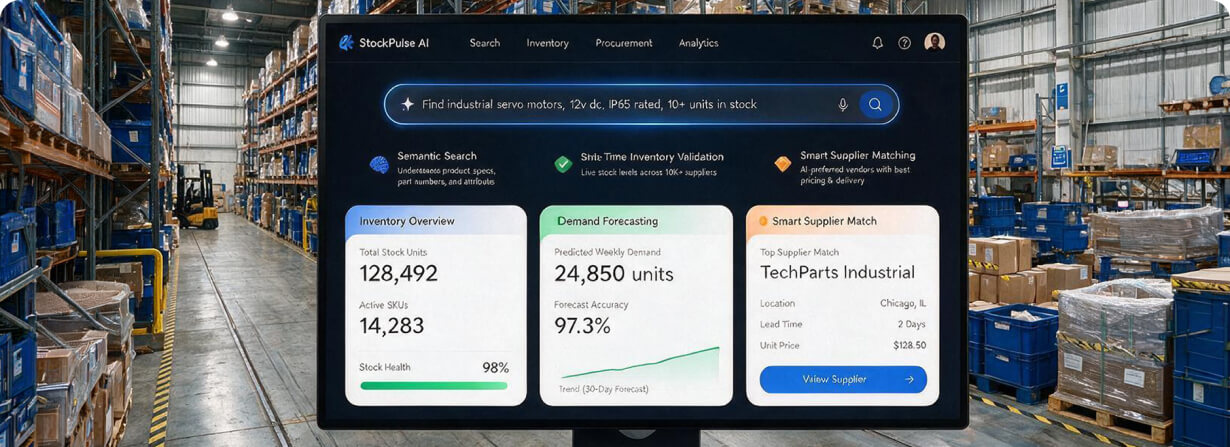
AI search across a very large SKU catalog with part-number recognition, technical specification matching, and account-level purchase history personalization.
Outcome:
Stronger search-to-cart rate, faster time to find products, and lower volume of support queries about findability.

Semantic search across a large library of articles and video assets, with intent-aware results, topic clustering, and personalized content ranking based on reading history.
Outcome:
Substantially higher content discovery via search and longer time on site for search-originating sessions.
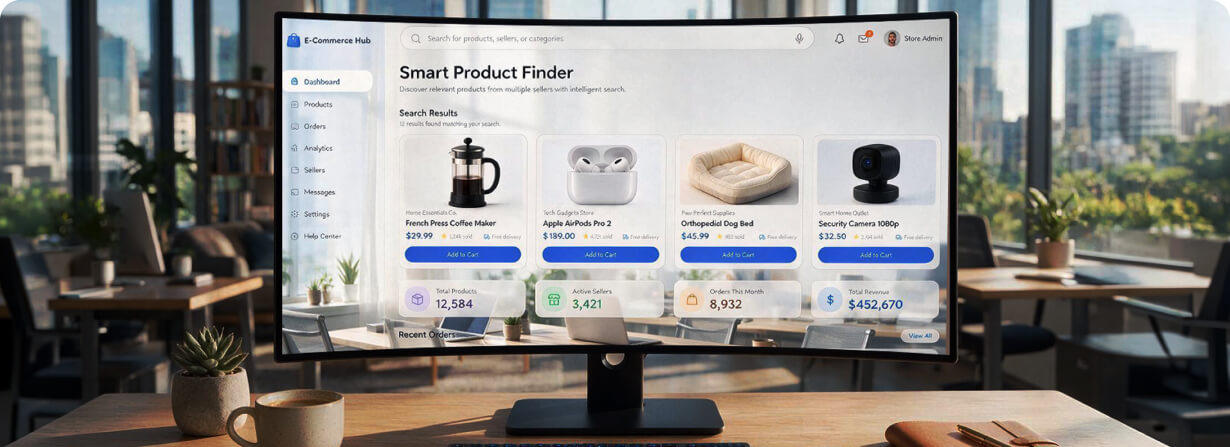
Replaced legacy search across a multi-seller marketplace with a unified semantic engine. Inventory-aware ranking, seller-quality signals, and category-context filters delivered better discovery for buyers and stronger conversion across long-tail queries.
Outcome:
Less manual merchandising effort and improved promoted product sell-through.
The platform is composed of best-in-class open-source components and our own custom layers. We tune each component to your scale, latency budget, and operational preferences.
Traditional site search software relies on exact keyword matching, which often fails when users use natural language or synonyms. Our AI search platform uses semantic search powered by transformer-based NLU to understand the intent and context behind a query. A search for "waterproof hiking gear" surfaces relevant products even when those exact words are not in the product title, reducing search friction significantly.
eCommerce site search is your highest-intent channel. Semantic search eliminates zero-result pages by recognizing entities and attributes within the query. By understanding the why behind the search, the platform helps shoppers find what they need quickly, which typically lifts search-to-cart rates well above standard browsing.
Yes. The AI search engine is platform-agnostic and connects to your existing infrastructure via API. Whether you run Shopify Plus, Magento, or a custom headless setup with React or Next.js, the platform integrates with your product catalog and behavioral data without a full re-platforming. It lives on your infrastructure, so you maintain full ownership of your data and search models.
Standard search tools serve the same results to every visitor, ignoring valuable session signals. Our platform uses individual shopper behavior, purchase history, and real-time intent to re-rank results. A repeat customer with a preference for premium brands sees those items at the top of their results. This relevance is what drives the consistent uplift in revenue per search session across our deployments.
The path from audit to live improvement is designed to be rapid. We begin with a Search Performance Audit to identify conversion gaps and zero-result triggers. Embedding models are then fine-tuned on your domain vocabulary so the platform is optimized for your unique catalog and customer language before going live.
Yes. The same semantic engine works for content libraries, knowledge bases, and media catalogs. We have shipped deployments across articles, videos, technical documentation, and B2B product catalogs. The ranking layer adapts to whatever signals matter for your domain, from purchase intent to reading history to technical specification matches.


Since 1999, SunTec has been a trusted business process and software engineering partner for technology companies worldwide. Our team of over 1,500 full-time employees delivers innovative services every day to help our clients save time and money.


