When a customer switches from app to web to in-store and has to start over each time, you lose trust, lose context, and lose revenue. Omnichannel is not a buzzword. It is a retention strategy.
Most organizations have the data to understand where customers drop off, stall, or churn. Few have the systems to act on it in real time, or even within the same quarter.
Design systems that do not connect to production components create drift. What ships are never quite what was designed to be, and inconsistency compounds at every release.
Swapping hero images based on a segment is not personalization. Structural personalization means different journeys, content hierarchies, and calls to action based on where each customer is in their lifecycle.
Our digital experience platform services combine journey strategy, design systems engineering, and omnichannel architecture. Experiences become consistent by design, not by accident.
Every engagement is grounded in customer behavior data and measured against business outcomes, not design awards.
Quantitative analysis of your current funnel, drop-off rates, and channel behavior. Qualitative review of key journeys. You get a prioritized opportunity map with projected revenue impact per initiative.
Omnichannel architecture is defined. The design system is scaffolded with production-connected components. The content model is designed for headless delivery across all channels.
Priority journeys are built and integrated with your data and personalization layer. The experimentation framework is configured. The staging environment is validated against real customer behavior data.
Phased rollout begins with live monitoring. KPIs are tracked against a baseline. Optimization cycles are driven by real data, not assumptions.
Start with an Experience Audit – The diagnostic identifies the highest-impact experience changes and their value.
These patterns reflect representative engagements across retail, financial services, B2B, and healthcare. Outcomes are illustrative and depend on baseline maturity and data availability.
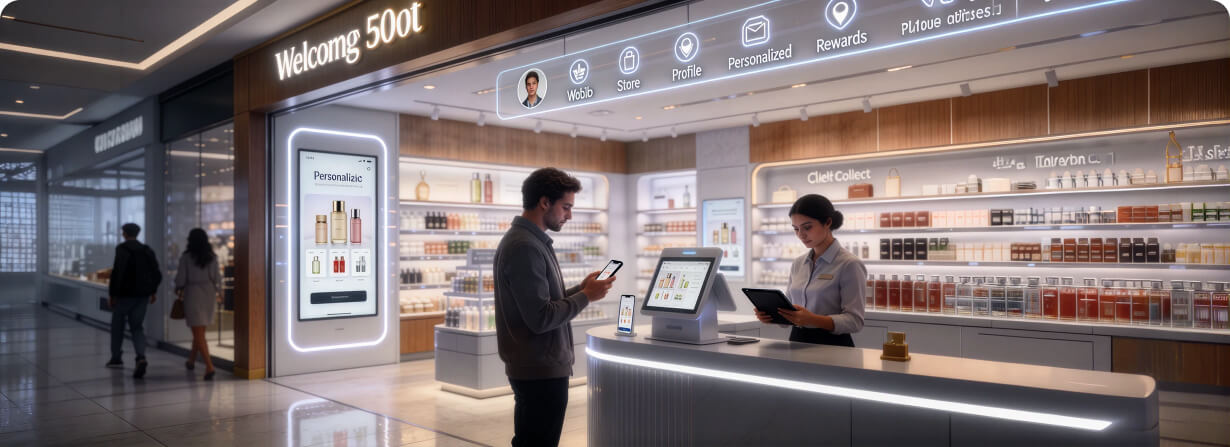
Unified web, mobile app, and in-store digital experience for a national retailer across many locations. A single customer profile drove consistent personalization at every touchpoint.
Outcome:
Stronger cross-channel customer retention and meaningful uplift in in-store digital conversion.
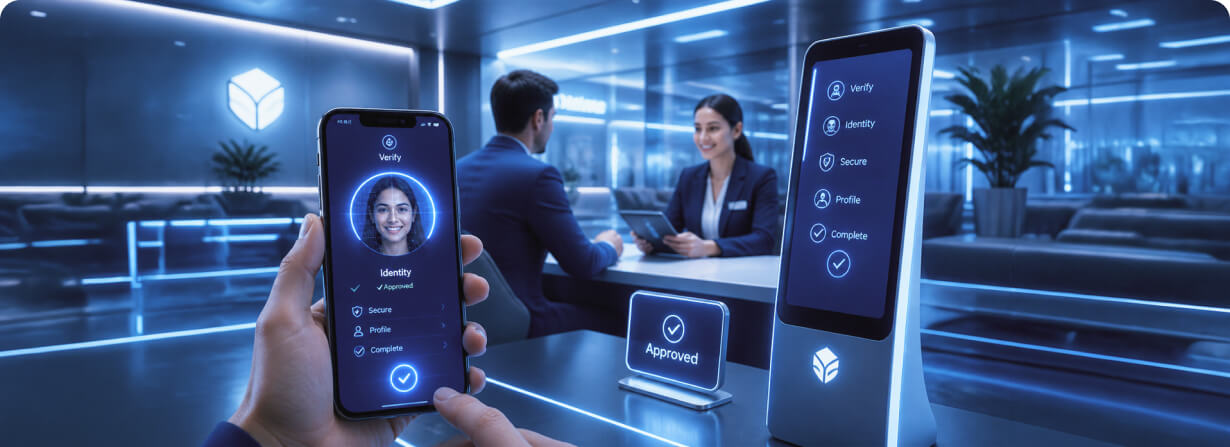
Redesigned end-to-end digital onboarding for a challenger bank. Reduced form steps and integrated real-time identity verification.
Outcome:
Significant improvement in application completion rate and lower cost per acquisition.

Restructured a multi-step procurement journey for an industrial distributor based on session behavior data. Friction was reduced at every identified drop-off point.
Outcome:
Lower cart abandonment and improvement in repeat order rate.
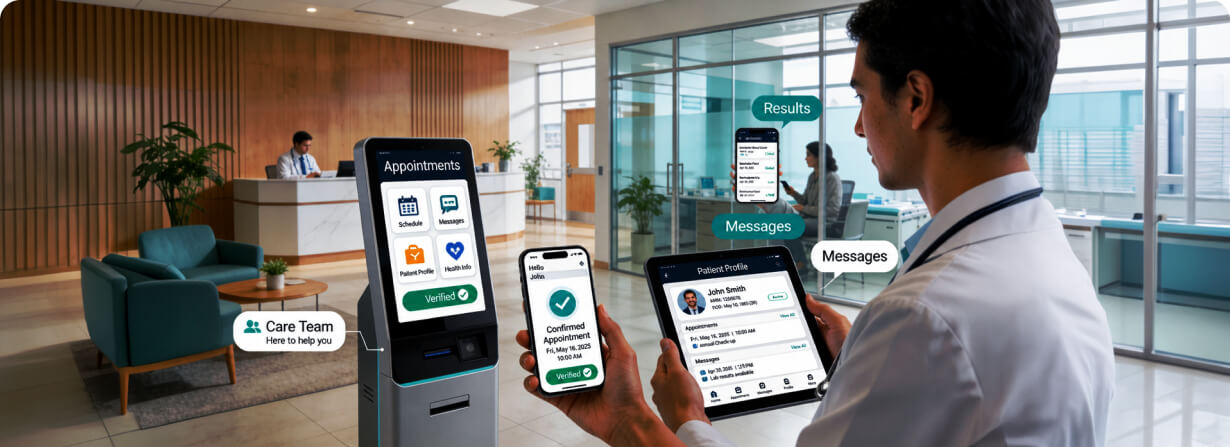
Built an omnichannel patient engagement platform connecting appointment booking, results delivery, and care messaging across web and mobile.
Outcome:
Stronger patient portal adoption and reduced call center contact volume.
We design architecture around your existing systems, not around our preferred vendors. Tooling decisions align with your scale, team capabilities, and operational profile.
Our digital experience services go beyond surface-level UI design. We focus on systemic UX, designing the architecture, design systems, and data integrations that power your customer interactions. The work includes journey mapping, design system engineering, and the deployment of production-ready components that keep your brand consistent across web, mobile, and physical touchpoints.
As part of our digital experience platform services, we help you navigate the shift toward composable and headless architectures. Rather than forcing a one-size-fits-all DXP, we audit your existing tech stack and business goals to recommend a best-of-breed ecosystem. We make sure your CMS, personalization layer, and data platforms communicate seamlessly to deliver a unified experience.
Today, a fragmented experience is a direct revenue leak. Our customer experience consulting services identify where silos between your app, web, and in-store channels are causing customer friction. We provide a data-driven Experience Audit that quantifies the value of specific journey improvements, so you can prioritize initiatives with the highest measurable lift in retention and conversion.
Our omnichannel experience services are designed to create a single view of the customer. By orchestrating journeys across every touchpoint, we ensure that if a customer starts on mobile and finishes in-store or on a desktop, their context, preferences, and progress follow them. This continuity is a powerful strategy for increasing lifetime value and reducing churn.
We operate on a velocity-to-value model. Traditional agencies might take months to deliver a mockup, while our process aims for measurable lift inside a phased rollout window. We start with a diagnostic audit, identify the highest-impact changes, and build, integrate, and test them quickly to prove ROI before scaling to a full transformation.
Consistency comes from a design system that is production-ready, not just documented. Components shipped to engineering are the same ones living in design tooling, so updates propagate together. Combined with the experimentation framework and analytics layer, your team can keep evolving the experience without drift between what was designed and what is live.


Since 1999, SunTec has been a trusted business process and software engineering partner for technology companies worldwide. Our team of over 1,500 full-time employees delivers innovative services every day to help our clients save time and money.


