
Free Consultation. Guaranteed Response within 8 Business Hours.

A premium student-mentorship and university-admissions consultancy that combines hands-on mentoring, bootcamps, and verified success stories to guide applicants and reassure parents. Their services require a clear, trustworthy digital presence to convert prospective students and support scalable program enrollment.
Before engagement, the client's website undermined its value proposition and growth goals:
The site failed to communicate the company's holistic mentorship approach, diluting perceived value.
Information was scattered and hard to discover, creating friction for both students and parents.
The experience needed to be engaging for students while maintaining credibility for parents.
The architecture could not easily support new capabilities such as bootcamp signups, success-story publishing, or a content hub.
Technical SEO gaps and slow pages reduced organic reach and visibility.
We designed and delivered a custom WordPress website focused on clarity, growth, and operational scalability.
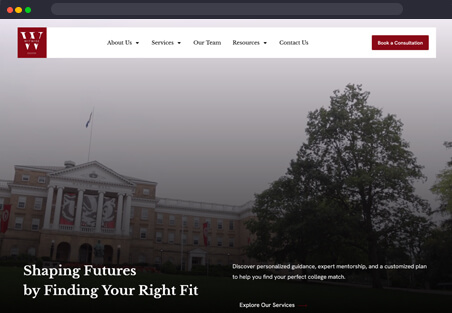
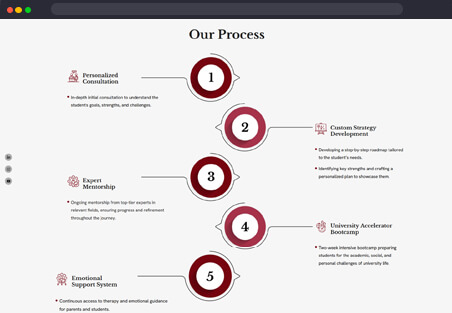
Built a fast, mobile-first site that showcases mentoring programs, bootcamps, and alumni outcomes designed to convert visitors into inquiries.
Reorganized the site into intuitive sections (Home · Services · Mentorship · Success Stories · Contact) so users can find relevant content in two clicks or fewer.
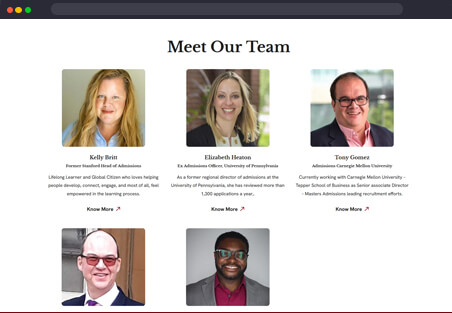
Designed a clean, student-centric interface that simultaneously signals professionalism and trustworthiness to parents and sponsors.
Placed inquiry forms, scheduling CTAs, and micro-conversions strategically across the site to maximize lead capture without interrupting the user journey.
Implemented on-page SEO best practices (structured data, compressions, meta optimization, and page-speed tuning) so the site shows up for high-intent searches.
Built the backend so content editors can publish bootcamps, blog posts, and success stories quickly, reducing update effort and future development costs.


Clearer navigation and focused content kept users engaged longer.
Optimized CTAs and form placements materially increased lead volume within three months.
Mobile-first design improved interactions and reduced bounce rate on handheld devices.
Technical SEO and structured content drove a significant increase in organic impressions and search traffic.
CMS improvements cut content update effort by 70%, enabling rapid rollouts of bootcamps and success stories.
Since 1999, SunTec has been a trusted business process and software engineering partner for technology companies worldwide. Our team of over 1,500 full-time employees delivers innovative services every day to help our clients save time and money.