
Free Consultation. Guaranteed Response within 8 Business Hours.

Our client has a major hospital network in the USA, serving hundreds of thousands of patients annually. They operate on a high-volume scale but faced operational constraints due to legacy infrastructure and manual, paper-based workflows.

HealthCore's modernization efforts were constrained by structural and technical limitations that impacted both clinical efficiency and patient experience.
Outdated core systems slowed data retrieval, delayed decision-making, and restricted operational agility.
Departmental platforms operated independently, creating information silos that limited collaboration and reduced workflow efficiency.
Rising demand for remote consultations could not be met due to the absence of scalable telehealth infrastructure and system interoperability.
Aging technology lacked enterprise-grade security controls, increasing regulatory risk and data-protection exposure.
HealthCore’s legacy infrastructure and paper-driven workflows limited scalability and slowed clinical and administrative processes. To support modern care delivery and operational performance, the organization required a future-ready digital foundation.
A unified electronic platform to replace manual records and provide real-time visibility into patient information across departments.
Integrated technology architecture to break down departmental silos and enable seamless collaboration between care teams.
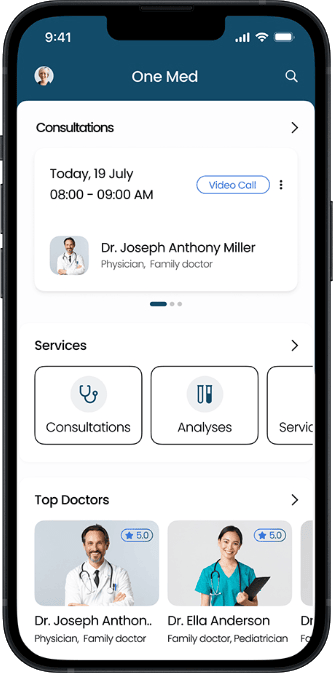
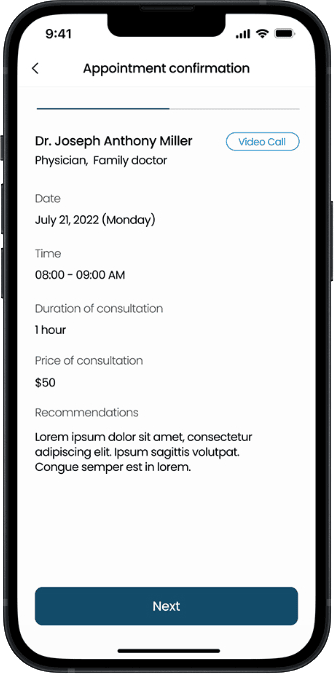
A fully integrated telemedicine framework capable of supporting rising patient demand for remote consultations and virtual care services.
Robust security controls designed to meet strict HIPAA requirements and safeguard sensitive healthcare data against unauthorized access.
To eliminate operational bottlenecks and improve patient care, we proposed a future-ready digital strategy centered on platform unification, system interoperability, and enterprise-grade security. The proposal was framed around:
For real-time access to patient records and streamlines clinical and administrative workflows.
To enable efficient information sharing and coordinated care delivery.
To support high-quality remote consultations.
To safeguard sensitive healthcare information and ensure regulatory adherence.
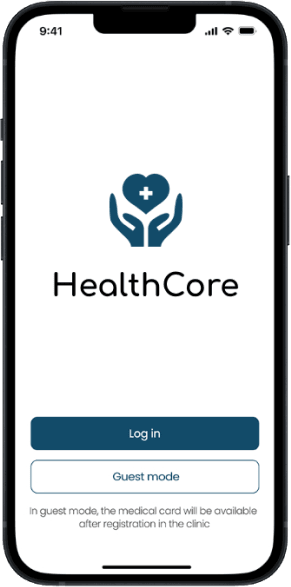
To address HealthCore’s specific challenges, TechnoScore executed a detailed and structured transformation process that combined advanced technologies with rigorous testing and implementation methods:
We conducted a deep technical review of legacy environments using static code analysis and quality-scanning tools to expose performance gaps, security risks, and architectural dependencies. Data flows across clinical and administrative functions were mapped to pinpoint access constraints and system bottlenecks. All dependencies, external services, and workflows were documented to establish an accurate baseline architecture map.
Functional and non-functional behaviors were modeled using architectural frameworks and interaction diagrams. Environment configurations, API inventories, and third-party integrations were audited to ensure clarity across system touchpoints. In parallel, stakeholders collaborated to define a scalable, secure, and user-centric future-state architecture.
A microservices-based cloud ecosystem was designed using enterprise-grade AWS services infrastructure. Secure storage, ETL processes, and data warehousing were implemented to support high-throughput workloads. A security-first architecture was enforced through role-based identity management, end-to-end encryption, and Zero-Trust access controls. High-availability and failover mechanisms were embedded to ensure uninterrupted platform availability. A telemedicine layer was architected for seamless interoperability with clinical systems.
We engineered a cloud-native, compliance-aligned EHR platform with real-time data synchronization across departments. Machine-learning models were deployed to automate scheduling, billing, and follow-up workflows while enabling predictive clinical insights. Event-driven integration frameworks unified fragmented systems, eliminating data silos. Business intelligence dashboards delivered real-time operational visibility across patient care and resource utilization.
Comprehensive functional validation ensured stability across clinical, telemedicine, and analytics layers. Performance and stress simulations validated concurrency readiness under peak demand. Enterprise-grade security testing was executed through controlled vulnerability scanning and penetration exercises. Regulatory alignment was audited to ensure compliance with healthcare data protection standards.
Legacy data was securely extracted, normalized, and validated to preserve integrity and eliminate inconsistencies. Data migration workflows ensured high-fidelity transfers to the cloud data warehouse, enabling immediate usability without disruption to operational continuity.
Multi-environment cloud infrastructure was provisioned to support development, testing, and production lifecycles. Automated CI/CD pipelines enabled rapid, risk-mitigated releases. Real-time monitoring and centralized logging frameworks provided proactive system health tracking. Post-deployment, continuous optimization ensured long-term stability and performance.
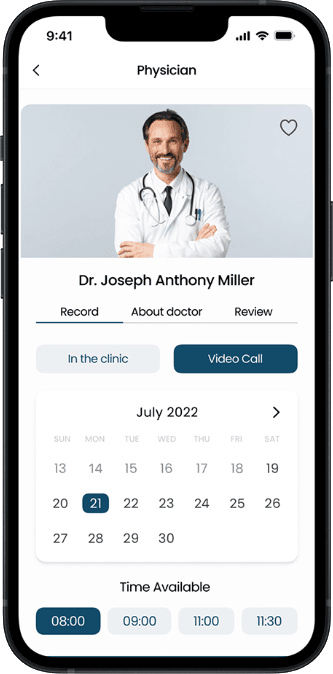
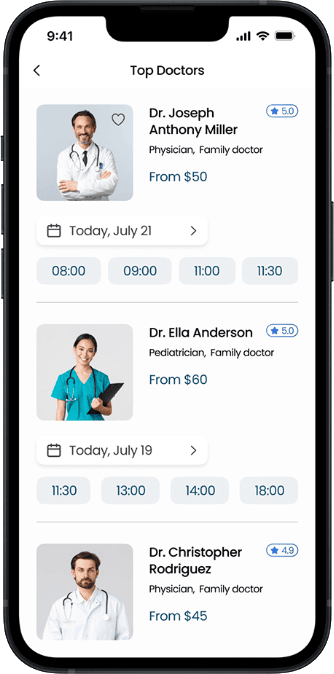
Our solution delivered measurable improvements across key performance areas:
Unified records and telemedicine reduced treatment delays and supported accurate diagnostics.
Automated workflows cut inefficiencies by 35% and saved 25% on administrative costs.
The cloud-native design allows HealthCore to scale and adapt as patient volume grows.
Over 20,000 virtual consultations in six months, expanding access to remote care.
A sharp drop in security incidents increased patient trust and regulatory compliance.
Partnering with TechnoScore was critical for our hospital network. Their custom-built digital solutions not only enhanced our operational efficiency but also helped us offer a better patient experience. Their expertise in AI and healthcare digitization truly set them apart. We are now able to provide telemedicine and manage patient data seamlessly, improving both patient outcomes and our bottom line.
John Doe, Chief Information Officer, HealthCore
Since 1999, SunTec has been a trusted business process and software engineering partner for technology companies worldwide. Our team of over 1,500 full-time employees delivers innovative services every day to help our clients save time and money.


