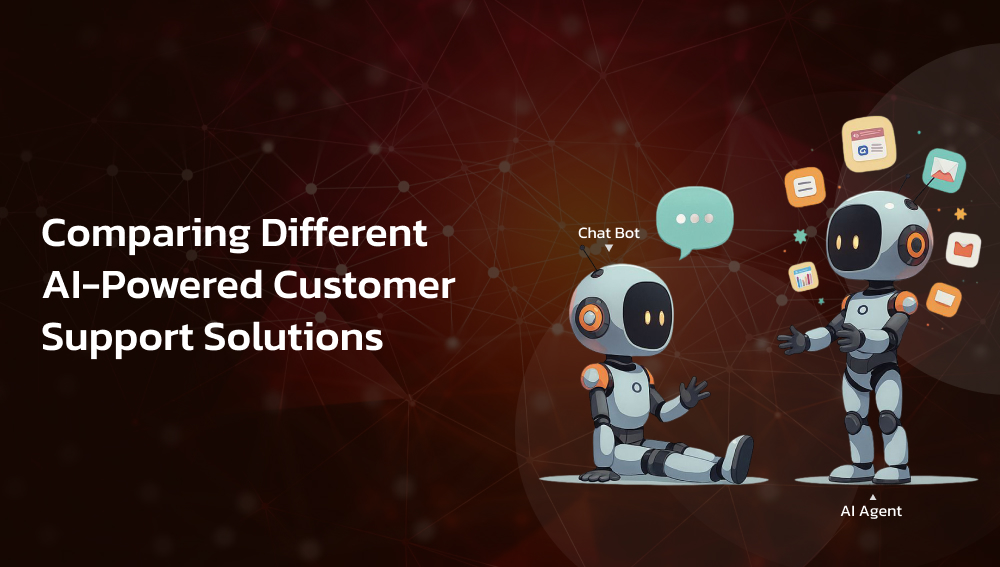
AI is no longer a nice-to-have for delivering remarkable customer support; it is mission-critical. In fact,
Continue reading

AI is no longer a nice-to-have for delivering remarkable customer support; it is mission-critical. In fact,
Continue reading

When ChatGPT launched in November 2022, foundational models and generative AI triggered an enterprise gold rush. Companies across every sector scrambled to integrate AI into their operations, driven by board-level pressure and fear of competitive disadvantage. Budgets materialized overnight, and pilot programs launched at unprecedented speed. Fast forward to today, and the results tell a different story: over 90% of generative AI pilots are failing to reach production.

Technical debt refers to the future costs incurred when software development teams take shortcuts to expedite delivery, often resulting in suboptimal code or architecture. While these shortcuts can lead to immediate gains, they frequently cause increased maintenance costs, reduced productivity, and hindered scalability over time.

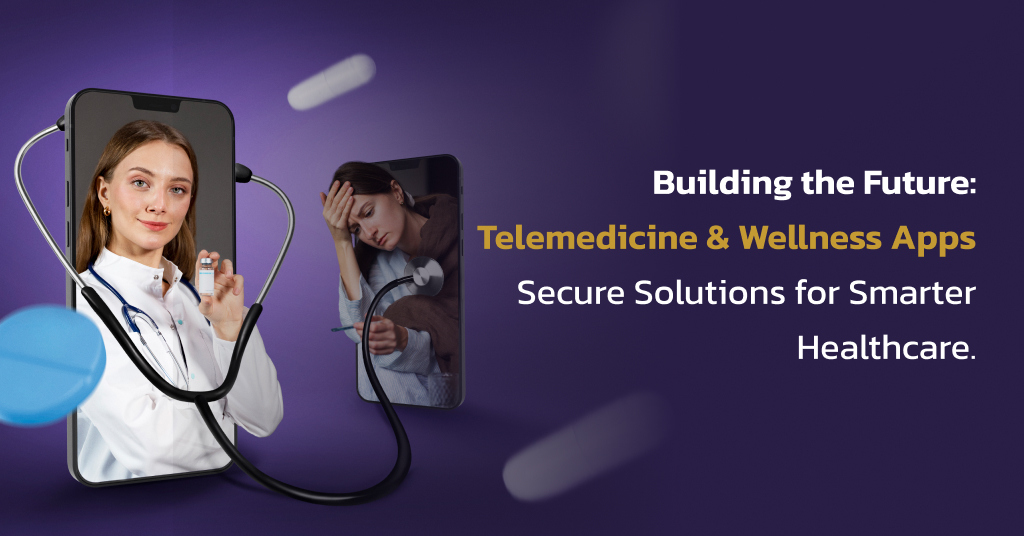
In an age where technology permeates every facet of life, healthcare software development services are the unsung heroes driving a silent revolution. We talk a lot about the introduction of ChatGPT, AI & ML in our everyday life (work+personal). Often, we criticize these technologies too, but we hardly talk about the real benefits of these technologies in defining life quality. Making healthcare mostly the least favored topic of conversation, as it is associated with suffering and illness. But healthcare is not limited to hospital emergencies only; it goes beyond, and so do the advanced technologies in healthcare. Today, preventive healthcare solutions are pushing into the mainstream, making way for wellness apps and platforms.
Continue reading

The healthcare industry generates an overwhelming amount of data every single day-roughly 137 terabytes!
This massive influx comes from a variety of sources, including medical devices, genetic studies, medical imaging, patient-generated health data, and historical EHR records. But the challenge is that this data isn’t neat or uniform. It’s a chaotic mix of structured EHR entries, unstructured physician notes, and complex imaging files, making it tough to store, process, and analyze. And clearly, traditional data handling and processing won’t be enough for this.
Continue reading

.NET has been developers’ favorite for over 25 years, and it’s easy to see why. Even after decades of updates, you can still work with the same code and libraries without worrying about breaking your app by using an older version. This remarkable backward compatibility provides a stable foundation that allows applications to scale and evolve seamlessly, enabling developers to innovate confidently without requiring extensive rewrites.
With the arrival of the latest .NET framework update—.NET 9, it gets even better, offering new features that help you create high-quality, future-ready applications, all while staying grounded in what makes this framework so reliable. Let’s explore the .NET 9 community toolkit.
Continue reading